

June 19, 2026
What Is a Cathodic Protection System?
If you own an underground propane tank, there's a quiet system working below the surface to keep it from corroding — and it's worth understanding, especially if you've recently received an inspection notice from us. Here's a plain-English look at what cathodic protection is, why your tank needs it, and what those test readings actually mean.
If you’ve received a notice from us about the cathodic protection system on your underground propane tank, you may be wondering what that actually means – and whether it’s something to be concerned about. The short answer: it’s a normal, manageable part of owning an underground tank, and we’re here to walk you through it. Here’s everything you need to know, in plain English.
Why underground tanks need corrosion protection in the first place
Underground propane tanks are made of steel, and steel buried in soil is in a constant, slow tug-of-war with the ground around it. When metal sits in soil, tiny natural electrical currents form between the tank and the earth. Wherever that current leaves the steel and flows out into the soil, the metal slowly breaks down – that’s corrosion, the same basic process as rust. Left unchecked over many years, corrosion can eventually weaken the tank. Protecting against it is simply part of responsible tank ownership.
Your tank already has two layers of defense
Good news: your tank wasn’t sent into the ground unprotected. There are two layers working to keep corrosion at bay.
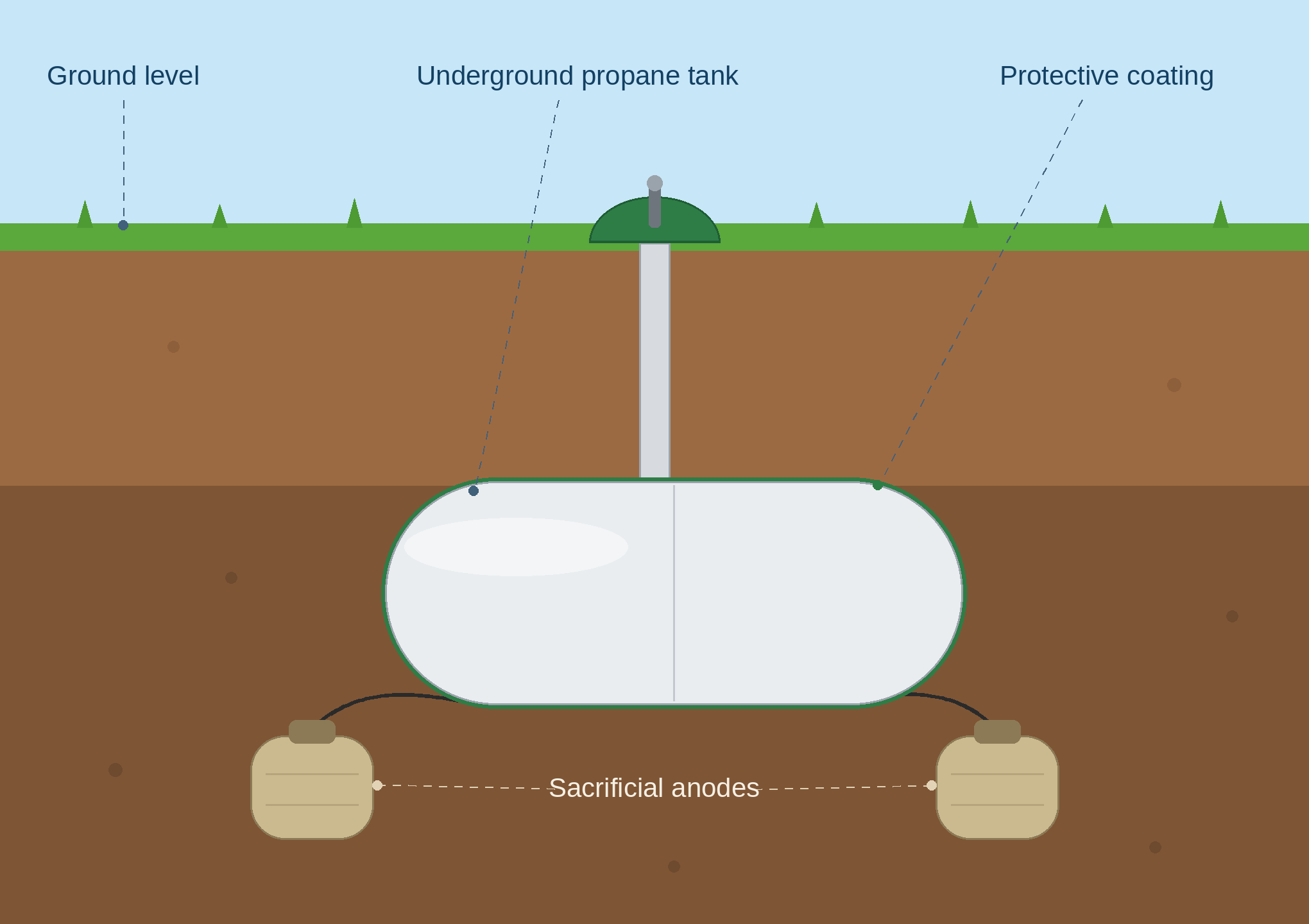
The first is the tank’s protective coating — a tough epoxy or powder-coat finish applied at the factory that shields the vast majority of the steel surface. The second is cathodic protection, which backs up that coating.
Why two layers? Because no coating is perfect. Installation, shifting or rocky soil, or simply time can create tiny nicks or thin spots. Cathodic protection is the safety net that guards those vulnerable points the coating can’t.
What cathodic protection actually is
Cathodic protection works on a clever idea: instead of trying to stop corrosion entirely, give it somewhere harmless to go.
The system uses a sacrificial anode — typically a block of magnesium buried near your tank and wired to it. Magnesium gives up its electrons more readily than steel does, so it corrodes first. By corroding in the tank’s place, the anode redirects those natural electrical currents so they flow toward the tank instead of away from it, and your steel stays protected.
That’s where the word “sacrificial” comes from. The anode is designed to wear away over time so your tank doesn’t have to. And that’s also exactly why it needs to be checked periodically — eventually the anode does its job so well that it wears out and needs to be supplemented or replaced.
Why we test, and what the numbers mean
Because anodes gradually wear down, periodic testing is the only way to confirm your tank is still protected.
This isn’t just good practice — it’s required. NFPA 58, the national safety code for propane systems, requires underground tanks to be protected against corrosion and requires the cathodic protection system to be tested at least once every 36 months (every three years).
The test measures your tank’s electrical potential in millivolts (mV). As a rule of thumb, a reading of -850 mV or more negative indicates the tank is adequately protected. If the readings come back less negative than that, it’s a signal that the anode has worn down and your tank is no longer fully shielded.
“I own my tank — what does that mean for me?”
If you own your underground tank outright (rather than leasing it from a supplier), maintaining the tank and its corrosion protection is your responsibility. We know that can sound like a burden, but here’s the reassuring part: keeping a tank protected is straightforward and inexpensive — especially compared to the cost and disruption of dealing with corrosion damage years down the road. A small step now protects a major investment later.
What happens if your system fails the test?
First, take a breath: a failed reading does not mean your tank is unsafe to use today. It means the protection has weakened and should be restored before corrosion has the chance to do any real damage. You’re catching it early — which is the whole point of testing.
In most cases the fix is simple: install an additional sacrificial anode to bring protection back up to a safe level. It’s typically about a one-hour job, and you don’t need to be home for it.
How Gerner Energy can help
We test, document, and restore cathodic protection for underground propane tanks for our customers. As a locally owned company, your family’s safety and comfort is our number one concern and that includes the tank quietly doing its job in your yard.
If you’ve received a notice from us, there’s nothing complicated to figure out. Just give our office a call at 410-472-2022 and we’ll get you taken care of.